

Carpinus japonica
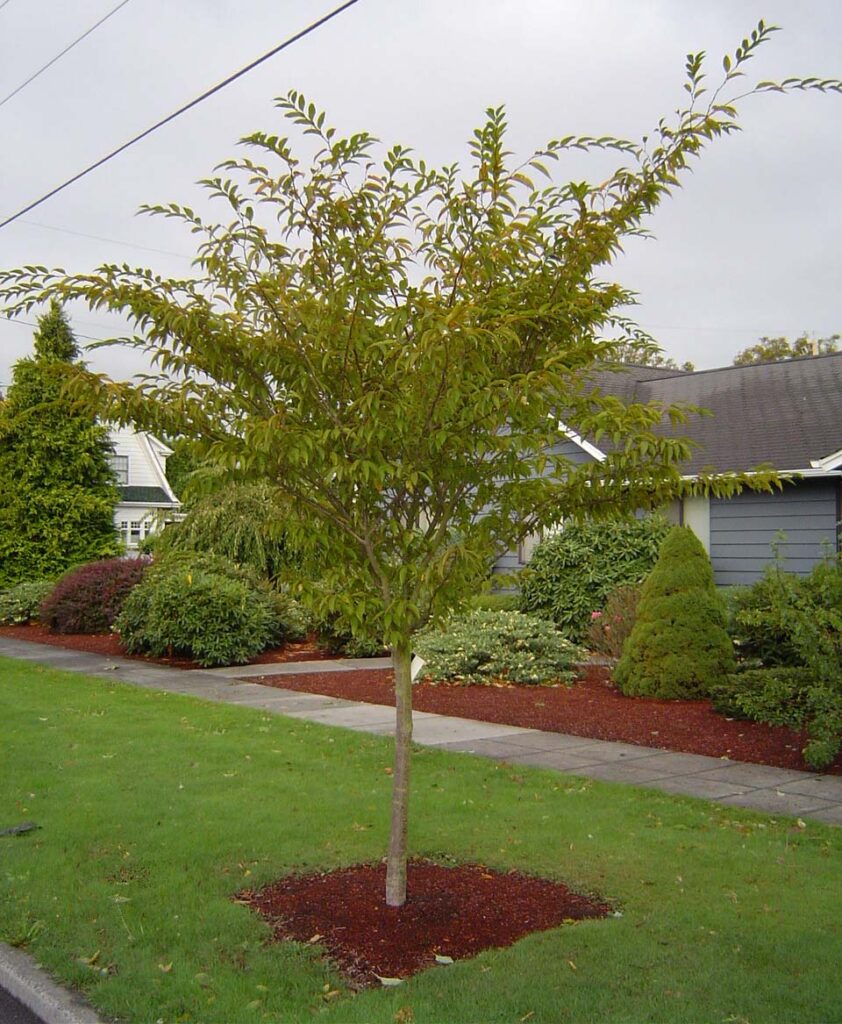
Here is a sleeper in the small tree family. As urban spaces are crowded by streets, structures, signs, and wires, urban foresters and landscape architects should be selecting trees that fit small urban spaces. The Japanese Hornbeam tree should be near the top of the list. Having the rugged qualities of all hornbeams, this one is special for its form and size. The Japanese Hornbeam is vase shaped; only reaching about 30′ in the U.S. It could be easily confused with the larger maturing Zelkova, but in my opinion, is tougher because of its ease of transplanting and the lack of the occasional dieback that Zelkovas can exhibit. The leaves are long and narrow, ovate to oblong, up to 4.5” long and 1.75” wide. They are doubly toothed, dark green leaves that yellow in the fall. There are no impressive flowers, although the fruit is unusual and interesting. The branch structure is spreading, and from our experience, limbs are flexible and lateral limbs are well attached.
One of the challenges for any street tree variety is finding selections with high enough branches on the trunk. Japanese Hornbeams like to branch low upon early growth, and nurseries must put some effort into developing a crown that begins above the pedestrian flow. When ordering, make sure you specify limbs on a trunk that begins no lower than 5′ or 6′.
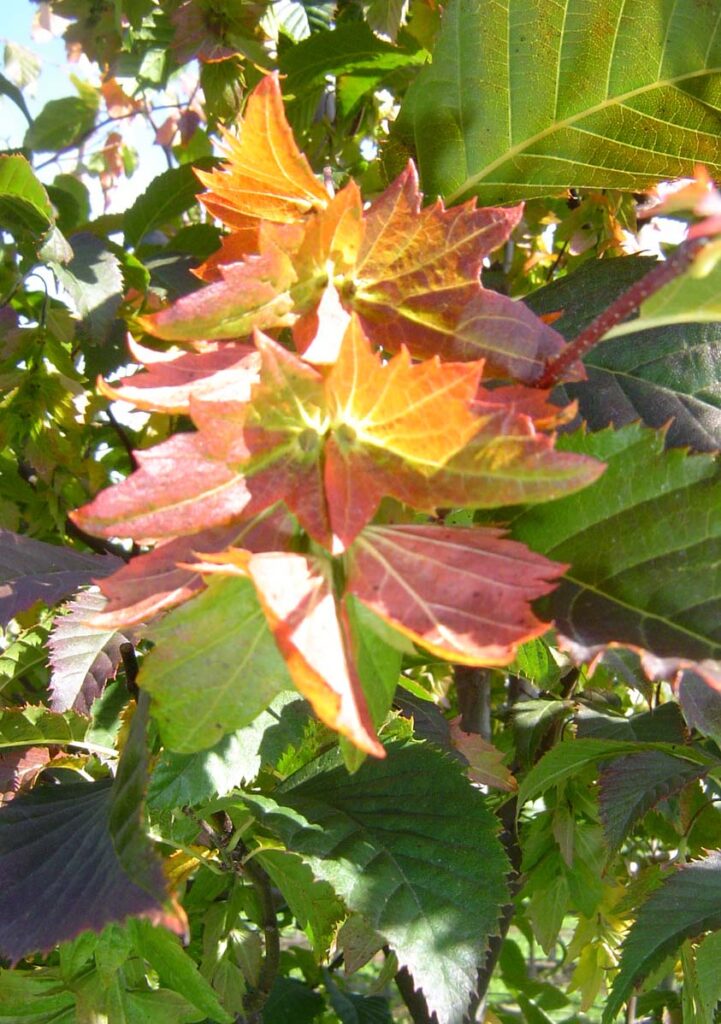
Japanese Hornbeams make great urban trees for other reasons.
Their small leaves do not clog storm drains and are easily blown away or swept up. Leaf density is moderate, allowing speckles of sunlight through canopies on sometimes cloudy Pacific Northwest days. This is also a perfect small tree for under power lines, not so tall as to conflict with wires, but wide spreading enough to hide utility wires from pedestrian and traffic view. I doubt their roots would cause any curb or sidewalk damage given their ultimate limited size. They also make excellent specimens in small garden and patio locations.
If you have any comments on the Japanese Hornbeam, please let me know!
CLICK HERE FOR MORE TREE PROFILES
Jim Barborinas
Owner of Urban Forest Nursery, Inc.
ISA Certified Arborist #0135
ASCA Registered Consulting Arborist #356
15119 McLean Rd.
Mount Vernon, WA 98273
jim@urbanforestnursery.com
Still wondering how Japanese Hornbeam behaves in landscapes or urban plantings?
Here are some common questions we hear from people considering this tree:
Yes — its vase-shaped form, flexible limbs, and moderate size make it an excellent street or urban tree. It’s well suited for sidewalks, parking strips, and spaces with overhead wires, and its small leaves don’t tend to create excessive debris.
Japanese Hornbeam grows at a slow to moderate pace and typically reaches around 25 to 30 feet in height with a graceful, spreading canopy. Its size makes it a good fit for urban planting where a medium-scale tree is needed.
This species naturally branches low on the trunk. For street or urban planting, it’s often trained so the canopy starts higher up, allowing for pedestrian clearance while still maintaining its attractive structure.
It has a rugged yet refined character, with narrow leaves, a strong branching structure, and a form that feels both natural and architectural. It also develops a soft yellow fall color that adds seasonal interest.
It performs best in well-drained soil and benefits from thoughtful siting, especially in urban areas where spacing and clearance matter. Once established, it is a durable and reliable tree for streets and landscapes.