

Prunus virginiana ‘Canada Red’
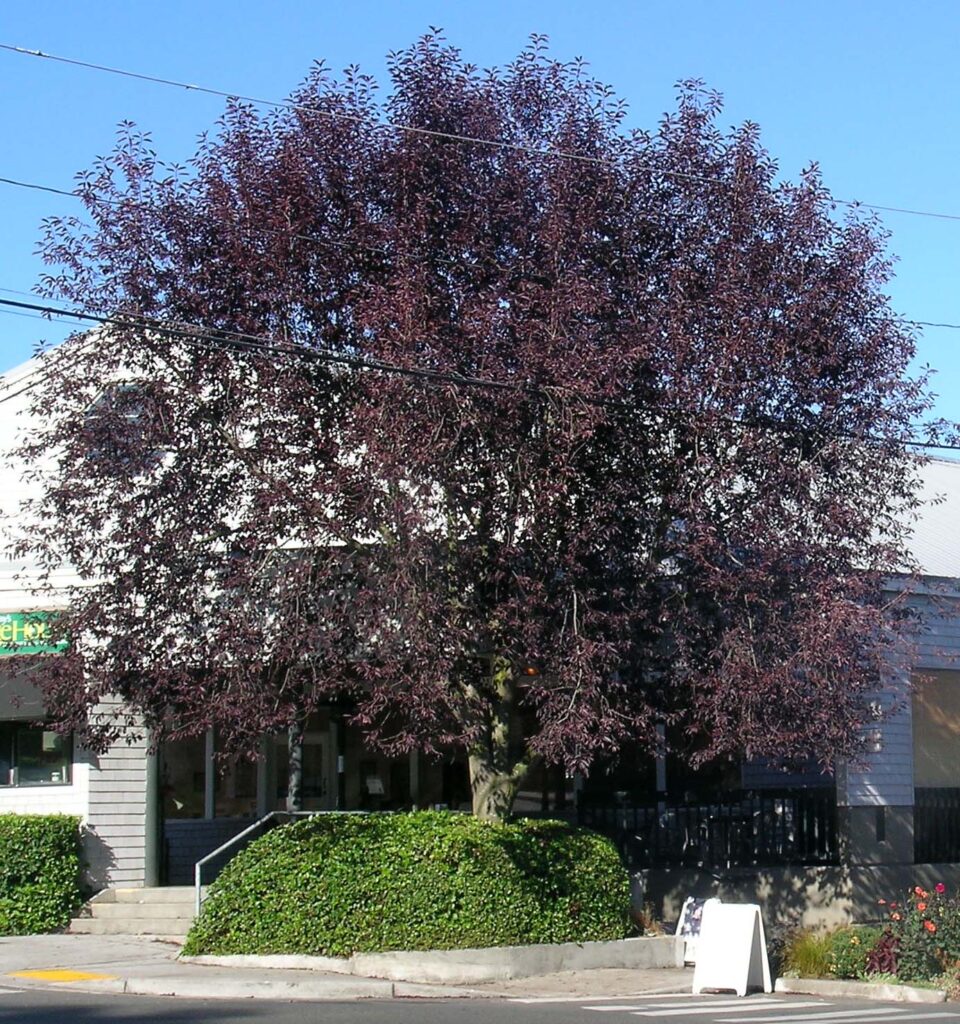
Ornamental cherry trees are usually selected for their flowers, but not the Chokecherry. Here is one tree selected instead for its toughness and leaf color. I first noticed the Chokecherry tree at rest stops while traveling across the northern United States. Then while visiting Anchorage, Alaska, the Chokecherry appeared in nearly 75% of the street tree planting sites. I am most familiar with the ‘Canada Red’ variety, which is a branch sport of an earlier selection, ‘Schubert’. The ‘Canada Red’ has a faster growth rate, straighter trunk, well-distributed branches, and a full-rounded crown.
Most notable and unique for this tree is when the first emerging green leaf completely turns a bright reddish purple in early summer. New green flushes of growth later in the year stand out until they also turn to purple. Small white flowers are inconspicuous, as well as the small dark purple fruit. The upright balanced structure and form provide an attractive dark silhouette in the winter sky. The Chokecherry is also considered a good utility line tree that has a mature height of approximately 25′ tall by 20′ wide, although on good sites will reach 30′ in height.
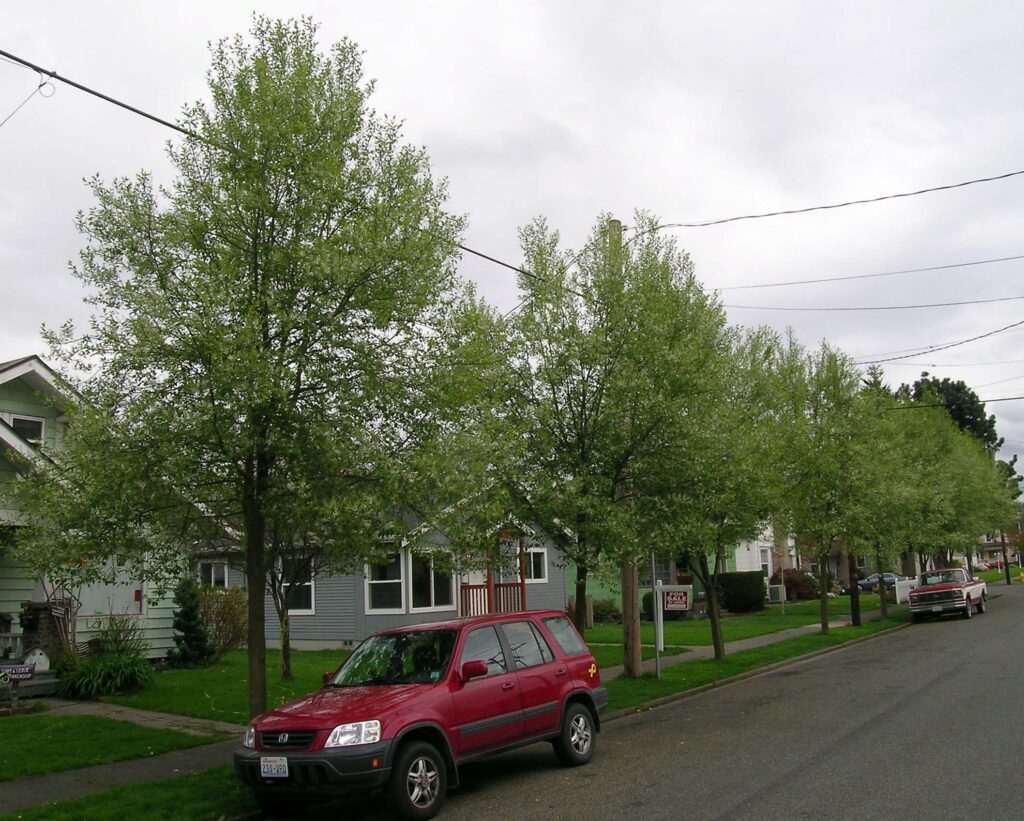
The most notable drawbacks we have seen are suckering at its base when young, and its attraction of tent caterpillars in certain years. The future of non-suckering rootstocks should reduce that problem.
Overall, the Chokecherry is apparently a tough hardy tree given its popularity in severe climates. From our experience, the ‘Canada Red’ variety is the most favorable and available in the Pacific Northwest.
Let me know what your experiences have been with this tree and we can pass them on.
CLICK HERE FOR MORE TREE PROFILES
Jim Barborinas
Owner of Urban Forest Nursery, Inc.
ISA Certified Arborist #0135
ASCA Registered Consulting Arborist #356
15119 McLean Rd.
Mount Vernon, WA 98273
jim@urbanforestnursery.com
Curious how Canada Red Chokecherry performs in landscapes and streetscapes?
Here are some common questions people ask about this tree:
Canada Red is selected for its toughness, straight trunk, well-distributed branches, and full-rounded crown. Its foliage is striking, turning bright reddish-purple in early summer and later in the season after new green flushes.
This tree reaches about 25 feet tall with a 20-foot spread, and on good sites can reach up to 30 feet. It maintains an upright, balanced structure that works well in landscapes and urban plantings.
Yes — its upright, balanced form and strong structure make it an excellent choice for streets, boulevards, and utility line areas. It provides a dark silhouette in winter and holds its shape well over time.
Absolutely — the bright reddish-purple summer leaves are eye-catching, complemented by inconspicuous white flowers and small dark fruit. Its color and structure provide visual interest throughout the growing season and into winter.
Young trees may sucker at the base and occasionally attract tent caterpillars, but newer non-suckering rootstocks reduce this issue. Overall, it is a hardy, low-maintenance tree once established.